The coffee journey: from Seoul to Los Angeles
It’s 12 a.m. on a regular Saturday night in Koreatown, Los Angeles. A specialty coffee place called Haus Dessert Boutique is still bustling with people and energy.
A man standing behind the counter making specialty coffees is dressed in the same unassuming costume as his waiters: black shirt, black pants and black squared glasses, but he is the owner of several coffee farms and the winner of numerous awards for his coffee beans—43-year-old Chris Kim.
For Kim, making an excellent cup of coffee is more difficult than making wine. “With wine, everything’s done in the origin. You bottle it, and it’s finished,” he says. “But making coffee isn’t finished at the origin. It’s sent to the destination, and roasted and there are different ways of roasting. The style of the barista who brews the coffee also affects the final taste.”
He placed his brewing apparatus on top of a scale so he can see exactly how much water he has poured through the carefully weighed coffee grounds, and he uses a timer to measure how long the process lasts.
“That cup took more than four minutes to brew,” he says, looking down at the readout. “For a single cup of coffee, I would want it to take closer to three.”
Instead of using machine, Kim uses a dripper to brew one of the most popular coffees—Hawaiian Kona Coffee, in our demonstration. He says using dripper is because it offers more control.
“These drippers are inexpensive, generally between $20 and $40,” Kim says. “Coffee loses its aromatics within 10 minutes of being ground, so you can’t grind it at the store if you don’t have the aromatics.”
The key ingredient, of course, is the coffee itself. It should be fresh, “You can’t make a great coffee if the coffee is old and stale,” Kim says. “It’s got to be within a month of roasting.”
As most of coffee lovers and experts, Kim wants to make sure every step in the process is truly great—from the ingredients to roasting and brewing a cup of coffee. However, unlike others, his journey with coffee started in a different way.
“Some people set their goal first and make it happen,” says Kim. “But there are many times when a situation leads you to doing something.”
Comfortably sitting in the red booth in his café, Kim shares his story of how it all came to be. He was born and raised in Seoul in South Korea; his father passed away when he was young and his mother raised Kim by herself.
“Coffee is everything to me, the passion, the alpha and omega of my life,” Kim says. “As soon as I woke up, I would drink a cup of coffee and go to the farm to check coffee trees, coffee cherries and coffee beans when I was in Hawaii.”
Kim never thought he would grow from being just an instant coffee drinker to one of the first Korean coffee farmers as well as “coffee hunters” (someone who travels around the world to find good coffee).
While he was growing up, Kim had no knowledge about freshly brewed coffee. He thought instant coffee was the only coffee in the world.
“I remember it was the first time I drank coffee in my life when I was in middle school in Korea,” says Kim. “I had no idea about the fact that coffee is cultivated until I went to Hawaii.”
Kim worked at his brother’s trading company in Korea after he graduated from college. However, he found that he wanted to do something by himself after he worked there for five years.
He left his brother’s company in 1998. At that time, he decided to work for a job with a Japanese friend whose name is Tomita at an educational foundation in Hawaii.
Kim found housing in the Big Island of Hawaii, the place near the west side of Kona, with Steve Tarbill, a local resident who always brewed a cup of fresh Kona coffee every morning.
“Every morning, I could smell the coffee roasting.” Kim says. One time Tabrill offered a cup to Kim, who was taken aback by his first brewed coffee drinking experience.
“After I sipped, all I could taste was bitter,” he says.
At that time, the person who would drink the ‘bitter’ coffee every day seemed crazy to him. He didn’t see the difference between the brewed coffee and instant coffee, even though he kept drinking brewed coffee for a month.
It wasn’t until he flew from Kona to Honolulu that he realized he had been drinking high-quality coffee.
“I drank the coffee that the airline served and…” Kim paused for a second, “It was so bad that I wanted to spit it back out.”
“That moment made me start to think about what I can do with coffee,” said Kim. “It was the turning point in my life.”
His interests in coffee was what jumpstarted his career as a coffee farmer. After he flew back to Kona, Kim started visiting different coffee farms and getting to know more about coffee: the flavor, the taste and the way to plant coffee trees.
In 2000, he purchased coffee farm from Tabrill in Hawaii. “The price [of the coffee farm] at that time wasn’t very expensive,” Kim says. “ I purchased 3 aces and it cost less than two hundred and thousand dollars.”
However, things didn’t go well as what Kim wanted to be. After buying the land, Kim realized the soil was much more barren than other places and his lacking of knowledge on planting coffee trees became the barriers at that time.
“It was difficult at the first time because I’ve never grown anything before, I thought to give up after the first year,” Kim said. “I’m glad that I got lots of support from my friends.”
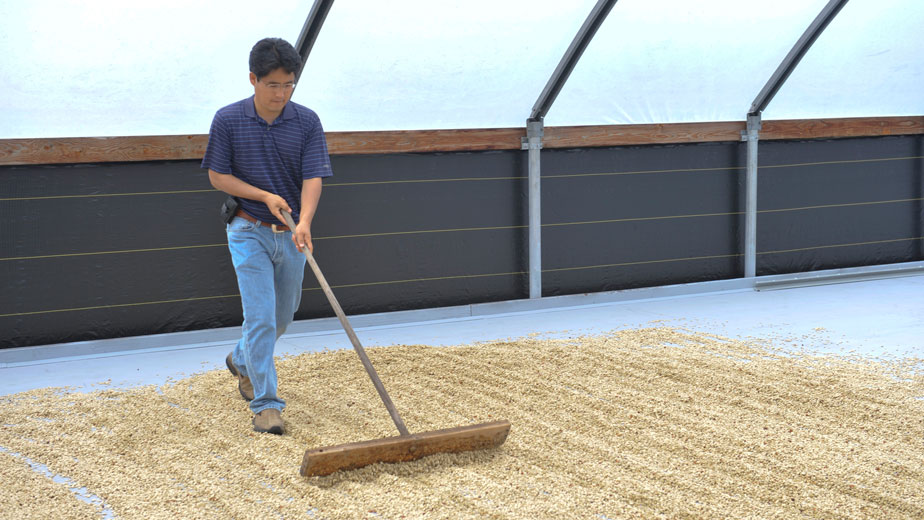
Kim currently owns 60 acres of coffee farms. His farms produce beans that supply his own restaurant as well as export to some Asian countries, like Korea and Japan.
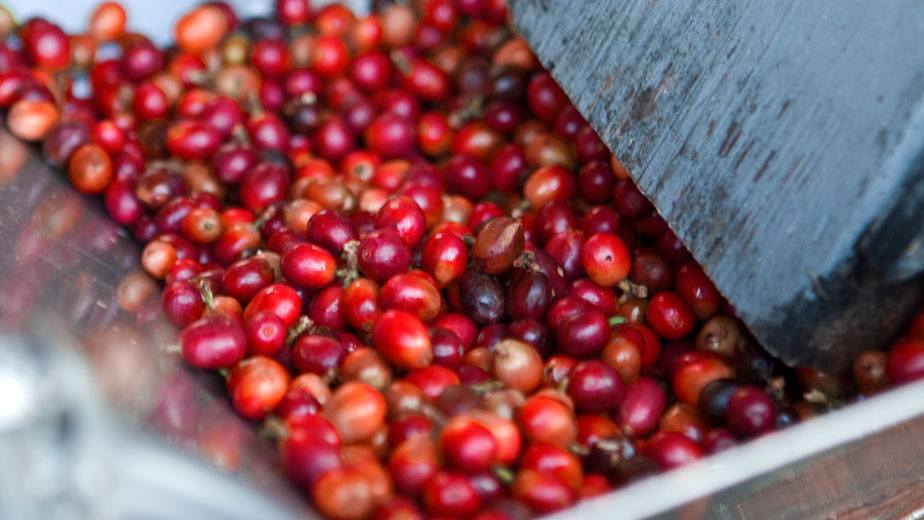
“Most employees of my farms are pickers, they will pick the coffee cherries manually,” says Kim. “My farms have about 60 pickers during the harvesting season—from August to February of next year.”
Kim also says most of the pickers are Mexican, “These pickers are extremely competent and some of them are so fast, even pick faster than machines.”
After spending years in the coffee farming market and winning second place in the Kona Coffee Cupping Competition in 2009, he decided to introduce the Hawaiian beans to Korea.
In 2010, the Specialty Coffee Association of America acknowledged Kim and he received a “Cupper” certificate. This certificate is awarded to people who use coffee cupping technique to evaluate coffee aroma and the flavor profile of a coffee.
Kim says because of his unique and prestigious experiences as a coffee farmer and cupper, the Korean media did a film about him and started calling him as “the coffee hunter.”
“My interests in coffee is the key,” Kim says. “I’m just one of the coffee hunters who traveling around world and looking for high-quality coffees,” Kim says.
After received the title of “the coffee hunter,” Kim says he started traveling to different countries and met with coffee growers from all over the world. He shared experiences in cultivating coffee trees with other coffee experts and learned how to make a profit in the coffee farming business.
“If I was in Hawaii all the time, I would only know Kona,” says Kim. “After traveling to different places, I realize that I have a lot of things I need to learn.”
In 2012, he opened the Coffee Hunters Roasting Lab in Korea to do coffee bean researches as well as to educate coffee lovers about coffee roasting and brewing techniques, according to Kim.
“Acquiring good coffee without studying them is very difficult,” says Kim. “But there are not enough research results or data in Korea.”
Being a coffee hunter, Kim says he gained lots of media exposure in Korea and attracted lots of attention from coffee and juice vendors who offered ideas on a variety of enterprises.
In 2013, he accepted an invitation from his friend, Brian Chong who is also the owner of IOTA Café in Koreatown, and came to Los Angeles. Kim took over the Haus café from Chong and completely refreshed the food and drink menus by himself.
“It’s not a easy business. As a Korean American, it’s kind of a limitation to reach out the local people, local market and local company,” says Kim.
“When I tried to sell the coffee to local people, it’s really hard because the cultures and languages are very different,” says Kim. “You need a lot of relationships to start your business. I didn’t have so many relationships at the beginning and it takes a lot of time to make it.”
To overcome the cultural and language barriers, Kim started to hire local people and to educate them about coffee knowledge.
“I hired three White baristas here, so when local people came and saw it, they would feel comfortable,” says Kim.
Although Kim has just refreshed the Haus Cafe about one year, the business has increased 40 percent since he started working at the café.
Kim now serves his own roaster on the café’s patio as well as produces one of the priciest cups of coffee in the city. One cup of Hawaii Kona coffee costs $20 in his café.
“You have to do what you like and be passionate about it,” said Kim. “When you are interested in something, you will try harder and get good results at the end.”
Kim believes that his passion about coffee is what leads him to become who he is right now. His passion and persistence helped him when he encountered obstacles through his life. He wants to make his Haus café to the Asian of Starbucks in the future.
hide